
S. Said*, H. H. El-Maghrabi, M. Riad and S. Mikhail Petroleum Refining Division, Egyptian Petroleum Research Institute, Nasr City, 11727, Cairo, Egypt. E-mail: samarsaid@epri.sci.eg; Tel: +20 22531203
First published on 21st May 2026
1. Introduction
Groundwater constitutes approximately one-third of the world's accessible freshwater resources and serves as a critical supply for drinking, agricultural, and industrial purposes. However, increasing anthropogenic activities particularly industrial discharge have led to the progressive contamination of groundwater with heavy metal ions, posing significant risks to both ecosystem integrity and human health.1,2 Heavy metals are broadly defined as metallic elements with densities exceeding 5 g cm−3 and atomic weights in the range of 63.5-200.6 g mol−1.3,4 These metals are non-biodegradable and tend to bioaccumulate in living organisms, causing a range of toxic effects even at trace concentrations. Among the most hazardous heavy metal contaminants, cadmium (Cd2+) and hexavalent chromium (Cr(VI)) have attracted considerable regulatory attention due to their documented carcinogenicity, mutagenicity, and nephrotoxicity. In the Delta State region, the maximum detected concentrations of Pb, Cr, Ni, and Cd were 0.18, 0.16, 0.10, and 0.02 mg L−1, respectively all exceeding the limits recommended by the U.S. Environmental Protection Agency (0.006, 0.05, 0.02, and 0.01 mg L−1).5 These findings highlight the urgent need for effective and economical water treatment strategies. A range of remediation technologies have been applied to remove heavy metals from contaminated water, including chemical precipitation, ion exchange, membrane filtration, electrocoagulation, and adsorption. Among these, adsorption is widely regarded as the most practical approach due to its operational simplicity, design flexibility, cost-effectiveness, and high removal efficiency. The performance of an adsorption process is largely governed by the physicochemical properties of the adsorbent material.4 In Egypt, rapidly growing water demand driven by population growth, agricultural expansion, and industrialization has intensified interest in the reuse and treatment of non-conventional water sources. Produced water, co-generated with crude oil and natural gas during production operations, represents a major industrial effluent stream that contains complex mixtures of dissolved and dispersed organic compounds alongside heavy metals such as Cd, Cr, Cu, Pb, Hg, Ni, Ag, and Zn.6 Effective treatment of produced water is essential for enabling its safe reuse in water flooding, irrigation, and industrial processes.Goethite (FeO(OH)) is one of the most abundant and environmentally stable iron oxyhydroxide minerals. Its structure consists of an orthorhombic lattice with Fe3+ occupying octahedral sites within a hexagonally close-packed array of O2− and OH− anions, giving rise to a high density of reactive surface hydroxyl groups.7 Goethite is distinguished by its unique physicochemical properties, including high specific surface area, abundant oxygen vacancies (Ov), and low synthesis cost. It forms naturally through the oxidative weathering of iron-rich minerals such as fayalite (Fe2SiO4) and pyrite (FeS2), yielding non-stoichiometric goethite with structural defects that enhance surface reactivity and adsorption capacity.8 Metal doping has emerged as a powerful strategy to further enhance the catalytic and adsorptive performance of goethite by modulating its electronic structure, optimizing oxygen vacancy concentrations, and generating additional active surface sites. Mohammed et al.9,10 demonstrated that goethite and SDS-modified goethite nanomaterials prepared by precipitation exhibited high adsorption capacities for Pb and Mn, attributable to increased surface hydroxyl group density. Liu et al.11 reported that Cu doping in FeOOH synergistically enhanced chlorine activation and degradation of organic pollutants. Li and Bi12 observed that Mn(III) and Zn(II) substitution in goethite promoted electron transfer and increased oxygen vacancies, thereby enhancing tetracycline degradation. Furthermore, Tao et al.13 demonstrated that Zr-CuO/FeO(OH) composites achieved efficient arsenic removal through cooperative oxidation and adsorption pathways.
In Egypt, rapidly growing water demand driven by population growth, agricultural expansion, and industrialization has intensified interest in the reuse and treatment of non-conventional water sources. Produced water, co-generated with crude oil and natural gas during production operations, represents a major industrial effluent stream that contains complex mixtures of dissolved and dispersed organic compounds alongside heavy metals such as Cd, Cr, Cu, Pb, Hg, Ni, Ag, and Zn.6 Effective treatment of produced water is essential for enabling its safe reuse in water flooding, irrigation, and industrial processes.
The novelty of the present study lies in the synergistic effect of specific metal ions (Al, Ca, Co, Mn) on the goethite lattice to enhance surface functionality. As demonstrated in Table 1, the Al-incorporated FeO(OH) synthesized in this work shows a superior maximum adsorption capacity for Cr(VI) compared to many recently reported iron-based nanomaterials and composites. This improvement is primarily attributed to the increased density of surface hydroxyl groups and the morphological refinement observed during characterization.
The present study aims to investigate the heavy metal remediation efficiency of previously prepared goethite (G7)9 and a series of newly synthesized metal-doped goethite samples (Ca-, Al-, Co-, and Mn-goethite) as adsorbents for the removal of divalent cadmium (Cd2+) and hexavalent chromium (Cr(VI)) from aqueous solutions. These two metals were selected based on their high toxicity, global prevalence in industrial effluents, and differing speciation behaviors, which allow for a comprehensive assessment of the adsorbents' versatility. The practical applicability of the optimized adsorbent was further evaluated using real produced water samples from the Gulf of Suez oil fields. Produced water (PW) the aqueous phase co-extracted with crude oil and natural gas during hydrocarbon production, representing the largest waste stream generated by the petroleum industry poses significant environmental challenges due to its complex composition, including elevated concentrations of heavy metals, salinity, and naturally occurring radioactive materials.
2. Experimental
2.1. Preparation of adsorbent samples
2.2. Characterization of the prepared adsorbents
The structural and physicochemical properties of the prepared samples were evaluated using a suite of analytical techniques. X-ray diffraction (XRD) analysis was performed on a Shimadzu XRD-6000 diffractometer (Japan) equipped with CuKα radiation (λ = 1.5406 Å), scanning over the 2θ range of 4°-80° with an increment of 0.028° min−1. Fourier-transform infrared (FTIR) spectra were recorded on a PerkinElmer Spectrum-1 spectrometer in the range of 400-4000 cm−1 at a resolution of 4 cm−1. Morphological characterization was carried out using a JEOL JEM-2100F high-resolution transmission electron microscope (HR-TEM) operating at 200 kV. Textural properties were determined from N2 adsorption-desorption isotherms measured at −196 °C using a NOVA 3200S automated gas sorption analyzer (Quantachrome Corporation). Specific surface areas were calculated by the Brunauer-Emmett-Teller (BET) method, and pore size distributions were obtained from the Barrett-Joyner-Halenda (BJH) method applied to the desorption branch of the isotherm. Thermal behavior was examined by differential thermal analysis (DTA) and thermogravimetric analysis (TGA). Zeta potential and hydrodynamic particle size were determined by dynamic light scattering.2.3. Adsorption experiments
Stock solutions of Cd(II) and Cr(VI) were prepared by dissolving the corresponding analytical-grade salts in distilled water to obtain concentrations in the range of 25-200 mg L−1. Batch adsorption experiments were conducted by adding a known mass of adsorbent (0.15-0.6 g L−1) to 25 mL of metal ion solution at the desired pH (3-10) and agitating at 200 rpm for 15-120 min. The initial pH was adjusted using dilute HCl or NaOH solutions. After equilibration, the suspension was centrifuged, and the residual metal concentration in the supernatant was determined by flame atomic absorption spectrophotometry (FAAS, Zenit 700p) according to ASTM D4691. The equilibrium adsorption capacity (qe, mg g−1) was calculated as follows: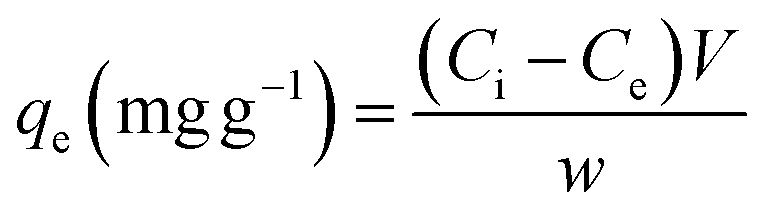 (1)where Ci and Ce (mg L−1) are the initial and equilibrium metal ion concentrations, respectively; V (L) is the volume of the solution; and W (g) is the dry mass of the adsorbent.
 Adsorption kinetics were modeled using pseudo-first-order (PFO) and pseudo-second-order (PSO) equations. The PFO rate expression14 is given by:
(2)Integrating eqn (2) with boundary conditions qt = 0 at t = 0 yields:
ln(qe − qt) = ln![[thin space (1/6-em)]](http://cdn.sachhayonline.com/wp-content/uploads/2026/06/fe-oh-2-ra-feo-1.gif) qe − k1t (3)where qt and qe (mg g−1) are the amounts of metal adsorbed at time t and at equilibrium, respectively, and k1 (min−1) is the PFO rate constant.
qe − k1t (3)where qt and qe (mg g−1) are the amounts of metal adsorbed at time t and at equilibrium, respectively, and k1 (min−1) is the PFO rate constant. The PSO model is expressed as:
(4)which, upon integration, gives the linearized form: (5)where k2 (g mg−1 min−1) is the PSO rate constant. Model suitability was evaluated by comparing the correlation coefficients (R2) and by assessing the agreement between calculated (qe,cal) and experimental (qe,exp) equilibrium capacities.2.4. Analysis of produced water samples
Two produced water samples co-generated from oil-field operations in the Gulf of Suez were provided for evaluation (Table 2). Prior to analysis, the samples were filtered through ashless filter paper (Whatman No. 42). Anion and cation concentrations were determined by ion chromatography (Dionex ICS-1100, equipped with AS9 and CS12 columns) according to ASTM D-4327 and D-6919, respectively. Heavy metal concentrations were measured by FAAS according to ASTM D4691. It should be noted that the produced water treatment experiments were conducted as single measurements (n = 1). The absence of replicate statistical data is acknowledged as a limitation of the present study. Results are therefore reported conservatively as removal to below the FAAS instrument detection limit, rather than as statistically confirmed complete removal. Future work will incorporate triplicate measurements with full statistical reporting to provide rigorous quantitative validation of the removal efficiencies reported herein.3. Results and discussion
3.1. Structural characterization of metal-incorporated goethite
The previously synthesized goethite sample (G7)9 was loaded with Ca, Al, Mn, and Co via an impregnation method. These metals were deliberately selected as dopants because Al, Mn, and Zn commonly occur as trace impurities in natural goethite formed under varying environmental conditions, and their incorporation is known to influence the structural, surface, and adsorption properties of synthetic goethite.3.2. Adsorption performance
The surface chemistry of FeO(OH)adsorption sites is governed by the coordination environment of surface Fe-OH, Fe-O−, and FeOH2+ groups, which serve as the primary active sites for toxic metal uptake through electrostatic interactions, ligand exchange, and surface complexation. The adsorption capacities of the prepared FeO(OH)samples for Cd(II) and Cr(VI) were systematically evaluated as a function of contact time, solution pH, adsorbate concentration, temperature, and adsorbent dose. The results are presented in Fig. 6-11.3.3. Adsorption kinetics
The kinetics of Cd(II) and Cr(VI) adsorption onto G7 were analyzed using the pseudo-first-order (PFO) and pseudo-second-order (PSO) models to elucidate the rate-limiting step and adsorption mechanism. Model parameters were determined from linearized plots and are summarized in Table 6.3.4. Adsorption isotherm analysis
Adsorption equilibrium data were analyzed using the Langmuir and Freundlich isotherm models to elucidate the nature of the adsorption process and the distribution of active sites on the adsorbent surface. Experiments were conducted over an initial concentration range of 25-200 mg L−1 at ambient temperature and with 10 mg of adsorbent. The exclusive Langmuir fit for Cd(II) reflects the homogeneous inner-sphere complexation of a single dominant aqueous species (Cd2+) at discrete surface hydroxyl sites of uniform coordination geometry. By contrast, the dual Langmuir-Freundlich applicability for Cr(VI) is attributed to the simultaneous presence of multiple adsorption modes (outer-sphere electrostatic and inner-sphere ligand exchange) and the concentration-dependent speciation of chromate between HCrO4− and CrO42− both of which introduce energetic heterogeneity at the FeO(OH) surface.21,263.5. Treatment of produced water
Produced water co-generated with crude oil and natural gas constitutes the largest volume waste stream in petroleum exploration and production operations, often exceeding the volume of oil and gas produced by a factor of ten or more. Its composition comprising dissolved and dispersed hydrocarbons, suspended solids, heavy metals, and inorganic salts poses significant environmental and operational challenges, particularly in regions with escalating water scarcity such as Egypt. Two produced water samples from oil fields in the Gulf of Suez were treated under optimized batch adsorption conditions: adsorbent mass = 10 mg, temperature = 30 °C, pH = 6.0, solution volume = 25 mL, contact time = 60 min (Table 1). The results demonstrated removal to below FAAS detection limit of all detected heavy metals Cr, Mn, Cd, and Pb from both water samples using G7. The initial concentrations of Cr, Mn, Cd, and Pb in Produced Water 1 were 1.8, 1.17, 9.7, and 19.95 mg L−1, respectively; in Produced Water 2, concentrations were below or at trace levels for most metals. The complete removal of heavy metals at the milligram-per-liter levels present in these samples, achieved under mild operating conditions and using a relatively small adsorbent mass, underscores the high specific adsorption capacity and selectivity of goethite nanomaterials for a broad spectrum of heavy metals. The performance of goethite in real matrix conditions where competing ions (Na+, Ca2+, Cl−, SO42−) are present is particularly noteworthy and suggests a strong inner-sphere complexation mechanism that is relatively insensitive to ionic competition. These results demonstrate that goethite nanomaterials represent a cost-effective and scalable alternative to expensive ion-exchange resins and semi-permeable membrane technologies for the treatment of heavy metal-contaminated industrial effluents.3.6. Proposed adsorption mechanism
Based on the adsorption kinetics, isotherm analysis, pH dependence, and structural characterization data, the following surface complexation mechanisms are proposed for the adsorption of Cd2+ and Cr(VI) onto goethite-based adsorbents.For divalent cadmium, adsorption proceeds via ligand exchange at the goethite surface, wherein Cd2+ displaces protons from reactive surface hydroxyl groups to form stable inner-sphere surface complexes.28,29 At low to moderate pH, monodentate complexes are preferentially formed:
![[triple bond, length as m-dash]](http://cdn.sachhayonline.com/wp-content/uploads/2026/06/fe-oh-2-ra-feo-2.gif) Fe-OH + Cd2+ → Fe-O-Cd+ + H+ (Monodentate complex)
Fe-OH + Cd2+ → Fe-O-Cd+ + H+ (Monodentate complex) At higher pH, the availability of adjacent surface sites promotes the formation of stronger bidentate surface complexes:
2Fe-OH + Cd2+ → (Fe-O)2Cd + 2H+ (Bidentate complex) The simultaneous presence of two types of terminal hydroxyl groups on the goethite surface hydroxo (-OH) and aqua (-OH2)—provides further flexibility for both mono- and bidentate coordination modes.30
For hexavalent chromium, adsorption proceeds via anion exchange, in which chromate anions (CrO42−) displace hydroxide groups from the goethite surface through an inner-sphere complexation mechanism, releasing OH− into solution and increasing the solution pH:31
2Fe-OH + CrO42− → (Fe−)2CrO4 + 2OH− This inner-sphere exchange mechanism results in strong, selective binding of chromate to the goethite surface, explaining the high adsorption capacities and favorable isotherm parameters observed across all adsorbent samples. The enhanced performance of Al-goethite is attributable to the increased density of reactive surface hydroxyl sites generated by Al incorporation, as confirmed by FTIR analysis, which amplifies the capacity for both inner-sphere complexation (Cd2+) and anion exchange (Cr(VI)).
It should be acknowledged that post-adsorption characterization of the spent adsorbents including zeta potential, DLS, and FTIR or XRD analysis was not performed in the present study, which represents a limitation. However, the adsorption mechanisms proposed herein are supported by, (i) the kinetic and isotherm modelling results confirming chemisorption and monolayer surface complexation; (ii) the static zeta potential and surface hydroxyl group data for the fresh adsorbents; (iii) the complete heavy metal removal achieved from complex produced water matrices containing competing ions; and (iv) extensive literature precedent for inner-sphere complexation of Cd2+ and Cr(VI) on goethite surfaces confirmed by direct spectroscopic techniques.21,26 Future studies will incorporate post-adsorption FTIR, zeta potential, and DLS measurements to provide direct experimental confirmation of the proposed surface interactions.
3.7. Adsorbent regeneration and green desorption strategies
While dilute mineral acids and alkalis represent the most widely reported eluents for regeneration of iron oxyhydroxide adsorbents, their use generates secondary waste streams that require neutralization and disposal, an acknowledged limitation from a green chemistry perspective. Several more sustainable regeneration strategies have been reported in the recent literature and are directly applicable to the FeO(OH)-based adsorbents developed in this study: electrochemical regeneration: the application of a mild anodic potential (0.5-1.5 V vs. Ag/AgCl) to the spent adsorbent has been demonstrated to desorb surface-bound metal ions through electrochemically induced pH shifts at the electrode-adsorbent interface, without the addition of chemical reagents.32 This approach generates no secondary chemical waste and is compatible with renewable energy sources. Mild organic acid eluents: naturally derived organic acids such as citric acid and oxalic acid both biodegradable and environmentally benign have been shown to effectively desorb Cd2+ and Cr(VI) from iron oxyhydroxide surfaces through competitive complexation and ligand exchange, respectively, at concentrations as low as 0.05-0.1 M.33 The resulting metal-loaded organic acid eluate can be further processed by electrodeposition or chemical precipitation to recover the heavy metals as reusable materials, closing the resource loop. Photocatalytic regeneration: For Cr(VI)-loaded adsorbents specifically, UV or solar irradiation in the presence of a sacrificial electron donor (e.g., citric acid, formic acid) has been shown to reduce surface-bound Cr(VI) to Cr(III), which subsequently desorbs from the now-positively-charged goethite surface under mild acidic conditions enabling simultaneous Cr detoxification and adsorbent regeneration.34 Supercritical CO2 extraction: emerging supercritical fluid-based regeneration methods using CO2, which is non-toxic, non-flammable, and recyclable, have demonstrated promising desorption efficiencies for heavy metal-loaded adsorbents without generating liquid waste streams.35Among these alternatives, electrochemical regeneration and mild organic acid elution represent the most immediately implementable and scalable options for the FeO(OH)-based adsorbents developed in this study, and are recommended as priorities for investigation in future work aimed at developing a fully circular and sustainable heavy metal removal process for produced water treatment.
4. Conclusions
This study demonstrates the successful synthesis and application of pristine and metal-incorporated goethite (FeO(OH)) nanomaterials for the efficient removal of cadmium (Cd2+) and hexavalent chromium (Cr(VI)) from aqueous solutions and real industrial produced water. The metal incorporation (Ca, Al, Co, Mn) into the goethite framework was confirmed by XRD, FTIR, HR-TEM, BET, and TGA/DTA analyses. Al incorporation produced the most pronounced structural effects, dispersing the goethite needle morphology, increasing specific surface area and zeta potential, and enriching the surface with reactive hydroxyl groups. Among all adsorbents tested, Al-goethite (G-Al) exhibited the highest adsorption capacities for both metals: qm = 86 mg L−1 for Cr(VI) and 38 mg L−1 for Cd2+, representing improvements of 18% and 36%, respectively, over pristine goethite (G7). The superior performance of G-Al is primarily attributed to its wider pore structure, higher surface area, and enhanced ionic potential of Al3+ at surface binding sites. Adsorption kinetics for both metals on all adsorbents conformed to the pseudo-second-order model (R2 ≥ 0.98), confirming a chemisorption mechanism involving electron exchange between metal ions and goethite surface hydroxyl groups. Equilibrium data were best described by the Langmuir isotherm for Cd2+ (R2 = 0.99), indicating monolayer adsorption on the (001) and (010) goethite crystal faces. Cr(VI) adsorption conformed to both Langmuir and Freundlich models, consistent with mixed mono- and multilayer surface coverage on heterogeneous sites. The produced water treatment experiments were conducted as single measurements (n = 1), and results are reported conservatively as removal of Cr, Mn, Cd, and Pb to below the FAAS instrument detection limit. This is acknowledged as a limitation; future work will incorporate triplicate analyses with full statistical reporting to provide rigorous quantitative validation of the removal efficiencies demonstrated herein. These materials represent a promising alternative to conventional expensive treatment technologies such as ion-exchange resins and membrane separation processes, demonstrating their strong practical potential as cost-effective, scalable adsorbents for industrial wastewater remediation.Author contributions
S. Said: conceptualization, methodology, investigation, formal analysis, data curation, writing - original draft, writing - review & editing, visualization, validation, supervision, resources, project administration, funding acquisition. H. H. El-Maghrabi: conceptualization, methodology, investigation, formal analysis, data curation, writing - original draft, writing - review & editing, visualization, validation, supervision, resources, project administration, funding acquisition. M. Riad: conceptualization, methodology, investigation, formal analysis, data curation, writing - original draft, writing - review & editing, visualization, validation, supervision, resources, project administration, funding acquisition. S. Mikhail: conceptualization, methodology, investigation, formal analysis, data curation, writing - original draft, writing - review & editing, visualization, validation, supervision, resources, project administration, funding acquisition.Conflicts of interest
The authors declare that they have no known competing financial interests or personal relationships that could have influenced the work reported in this paper.Data availability
The data supporting this article have been included as part of the Supplementary Information (SI). Supplementary information is available. See DOI: https://doi.org/10.1039/d6ra03786k.Acknowledgements
The authors declare that this research received no specific grant from any funding agency in the public, commercial, or not-for-profit sectors.References
- N. P. Sibiya, T. P. Mahlangu, E. K. Tetteh and S. Rathilal, Review on advancing heavy metals removal: The use of iron oxide nanoparticles and microalgae-based adsorbents, Cleaner Chem. Eng., 2025, 11, 100137 CrossRef .
- B. O. Yusuf, et al., Comprehensive technologies for heavy metal remediation: Adsorption, membrane processes, photocatalysis, and AI-driven design, Desalination, 2025, 119261 CrossRef CAS .
- H. K. Herath, J. V Cizdziel, B. F. Platt and I. H. Widanagamage, Potential removal of heavy metal ions from polluted water using Bauxite, Environ. Adv., 2023, 12, 100362 CrossRef CAS .
- E. B. Hussein, F. A. Rasheed, A. S. Mohammed and K. F. Kayani, Emerging nanotechnology approaches for sustainable water treatment and heavy metals removal: a comprehensive review, RSC Adv., 2025, 15(48), 41061-41107 RSC .
- A. M. Abdelaal, 12th International Conference on Mining, Petroleum and Metallurgical Engineering (MPM12), 2014, CODE MIN 07-2014 Search PubMed.
- L. K. Wang, D. A. Vaccari, Y. Li, and N. K. Shammas, Chemical precipitation, in Physicochemical Treatment Processes, Springer, 2005, pp. 141-197 Search PubMed .
- N. Karimian, M. I. Pownceby, E. D. Burton and A. J. Frierdich, Phosphorus-goethite interactions: A review of mechanisms, environmental implications, and industrial relevance, Sci. Total Environ., 2026, 1012, 181114 CrossRef CAS .
- Z. Wang, M. Mann, J. L. Hamilton, J. L. Wykes and A. J. Frierdich, Comparison between Co (II) and Ni (II) cycling at goethite-water interfaces: Interplay with Fe (II)-catalyzed recrystallization, Geochim. Cosmochim. Acta, 2024, 384, 128-139 CrossRef CAS .
- R. Mohammed, H. H. El-Maghrabi, A. A. Younes, A. B. Farag, S. Mikhail and M. Riad, SDS-goethite adsorbent material preparation, structural characterization and the kinetics of the manganese adsorption, J. Mol. Liq., 2017, 231, 499-508 CrossRef CAS .
- R. Mohamed, H. H. El-Maghrabi, M. Riad and S. Mikhail, Environmental friendly FeOOH adsorbent materials preparation, characterization and mathematical kinetics adsorption data, J. Water Process Eng., 2017, 16, 212-222 CrossRef .
- Z. Liu, J. Hao, X. Zhang and G. Wang, Enhanced chlorine activation on Cu-doped goethite via the synergistic effect of Cu+ and oxygen vacancy for efficient organic pollutant degradation, Environ. Surf. Interfaces, 2025, 18-27 Search PubMed .
- Y. Li and E. Bi, Mn-or Zn-substituted goethite enhancing tetracycline degradation by increasing oxygen vacancies and promoting electron transfer, Colloids Surf., A, 2024, 697, 134374 CrossRef CAS .
- C. Tao, K. Wu, T. Liu, S. Yang and Z. Li, One-step removal of p-arsanilic acid via constructing bifunctional Zr-CuO/α-FeOOH catalyst: Efficient peroxymonosulfate activation, cooperative oxidation and adsorption, Chem. Eng. J., 2025, 512, 162285 CrossRef CAS .
- H. Qiu, L. Lv, B. Pan, Q. Zhang, W. Zhang and Q. Zhang, Critical review in adsorption kinetic models, J. Zhejiang Univ. - Sci. A Appl. Phys. Eng., 2009, 10(5), 716-724 CrossRef CAS .
- R. M. Cornell and U. Schwertmann, The Iron Oxides: Structure, Properties, Reactions, Occurrences and Uses, John Wiley & Sons, 2003 Search PubMed .
- Y. Zhao, J. Geng, X. Wang, X. Gu and S. Gao, Adsorption of tetracycline onto goethite in the presence of metal cations and humic substances, J. Colloid Interface Sci., 2011, 361(1), 247-251 CrossRef CAS PubMed .
- O. A. Oyewo, S. Makgato, H. Ferjani, C. Amairia, D. C. Onwudiwe and S. Abdalla, 1D α-FeO (OH) and its transformation to α-Fe2O3 nanorods: Synthesis and photocatalytic evaluation using bromocresol green, Inorg. Chem. Commun., 2025, 175, 114147 CrossRef CAS .
- F. A. Andersen, et al., Infrared spectra of amorphous and crystalline calcium carbonate, Acta Chem. Scand., 1991, 45(10), 1018-1024 CrossRef CAS .
- J. Pedrosa, B. F. O. Costa, A. Portugal and L. Durães, Controlled phase formation of nanocrystalline iron oxides/hydroxides in solution-An insight on the phase transformation mechanisms, Mater. Chem. Phys., 2015, 163, 88-98 CrossRef CAS .
- V. V. Nenonen, et al., Effects of organic ligands, phosphate and Ca on the structure and composition of Fe (III)-precipitates formed by Fe (II) oxidation at near-neutral pH, Environ. Sci. Process. Impacts, 2025, 27(8), 2479-2506 RSC .
- S. Fendorf, M. J. Eick, P. Grossl and D. L. Sparks, Arsenate and chromate retention mechanisms on goethite. 1. Surface structure, Environ. Sci. Technol., 1997, 31(2), 315-320 CrossRef CAS .
- M. Kosmulski, pH-dependent surface charging and points of zero charge. IV. Update and new approach, J. Colloid Interface Sci., 2009, 337(2), 439-448 CrossRef CAS PubMed .
- N. Galvez, V. Barron and J. Torrent, Preparation and properties of hematite with structural phosphorus, Clays Clay Miner., 1999, 47(3), 375-385 CrossRef CAS .
- R. E. Mesmer and C. F. Baes Jr, Review of hydrolysis behavior of ions in aqueous solutions, MRS Online Proc. Libr., 1990, 180(1), 85 CrossRef CAS .
- Y.-S. Ho and G. McKay, Pseudo-second order model for sorption processes, Process Biochem., 1999, 34(5), 451-465 CrossRef CAS .
- P. R. Grossl, M. Eick, D. L. Sparks, S. Goldberg and C. C. Ainsworth, Arsenate and chromate retention mechanisms on goethite. 2. Kinetic evaluation using a pressure-jump relaxation technique, Environ. Sci. Technol., 1997, 31(2), 321-326 CrossRef CAS .
- K. Rout, A. Dash, M. Mohapatra and S. Anand, Manganese doped goethite: structural, optical and adsorption properties, J. Environ. Chem. Eng., 2014, 2(1), 434-443 CrossRef CAS .
- J. D. Ostergren, G. E. Brown Jr, G. A. Parks and P. Persson, Inorganic ligand effects on Pb (II) sorption to goethite (α-FeOOH): II. Sulfate, J. Colloid Interface Sci., 2000, 225(2), 483-493 CrossRef CAS PubMed .
- J. D. Filius, T. Hiemstra and W. H. Van Riemsdijk, Adsorption of small weak organic acids on goethite: Modeling of mechanisms, J. Colloid Interface Sci., 1997, 195(2), 368-380 CrossRef CAS PubMed .
- R. Strauss, G. W. Brümmer and N. J. Barrow, Effects of crystallinity of goethite: II. Rates of sorption and desorption of phosphate, Eur. J. Soil Sci., 1997, 48(1), 101-114 CrossRef CAS .
- A. Jaiswal, S. Banerjee, R. Mani and M. C. Chattopadhyaya, Synthesis, characterization and application of goethite mineral as an adsorbent, J. Environ. Chem. Eng., 2013, 1(3), 281-289 CrossRef CAS .
- M. El Gamal, H. A. Mousa, M. H. El-Naas, R. Zacharia and S. Judd, Bio-regeneration of activated carbon: A comprehensive review, Sep. Purif. Technol., 2018, 197, 345-359 CrossRef CAS .
- S. Babel and T. A. Kurniawan, Low-cost adsorbents for heavy metals uptake from contaminated water: a review, J. Hazard. Mater., 2003, 97(1-3), 219-243 CrossRef CAS PubMed .
- M. I. Litter, Last advances on TiO2-photocatalytic removal of chromium, uranium and arsenic, Curr. Opin. Green Sustainable Chem., 2017, 6, 150-158 CrossRef .
- C.-H. Weng and M.-C. Hsu, Regeneration of granular activated carbon by an electrochemical process, Sep. Purif. Technol., 2008, 64(2), 227-236 CrossRef CAS .


Hoặc