
7 Best Hard Court Tennis Shoes in 2025
Good to know about hard courts
Before we look at the shoes, it’s helpful to understand the court surface they are designed for.
Very common surface: Hard courts are arguably the most popular of the tennis court types and are also the most commonly played on surfaces, not only amongst amateurs but also on the professional tennis tour.
It is abrasive: Hard courts are made out of an asphalt or concrete base that is coated with different materials and therefore can be seen in a range of colors, green and blue being the most common. From a distance the surface appears silky smooth but up close it is rather abrasive. Most hard court tennis shoes are white in appearance, but this type of surface can accommodate any color.
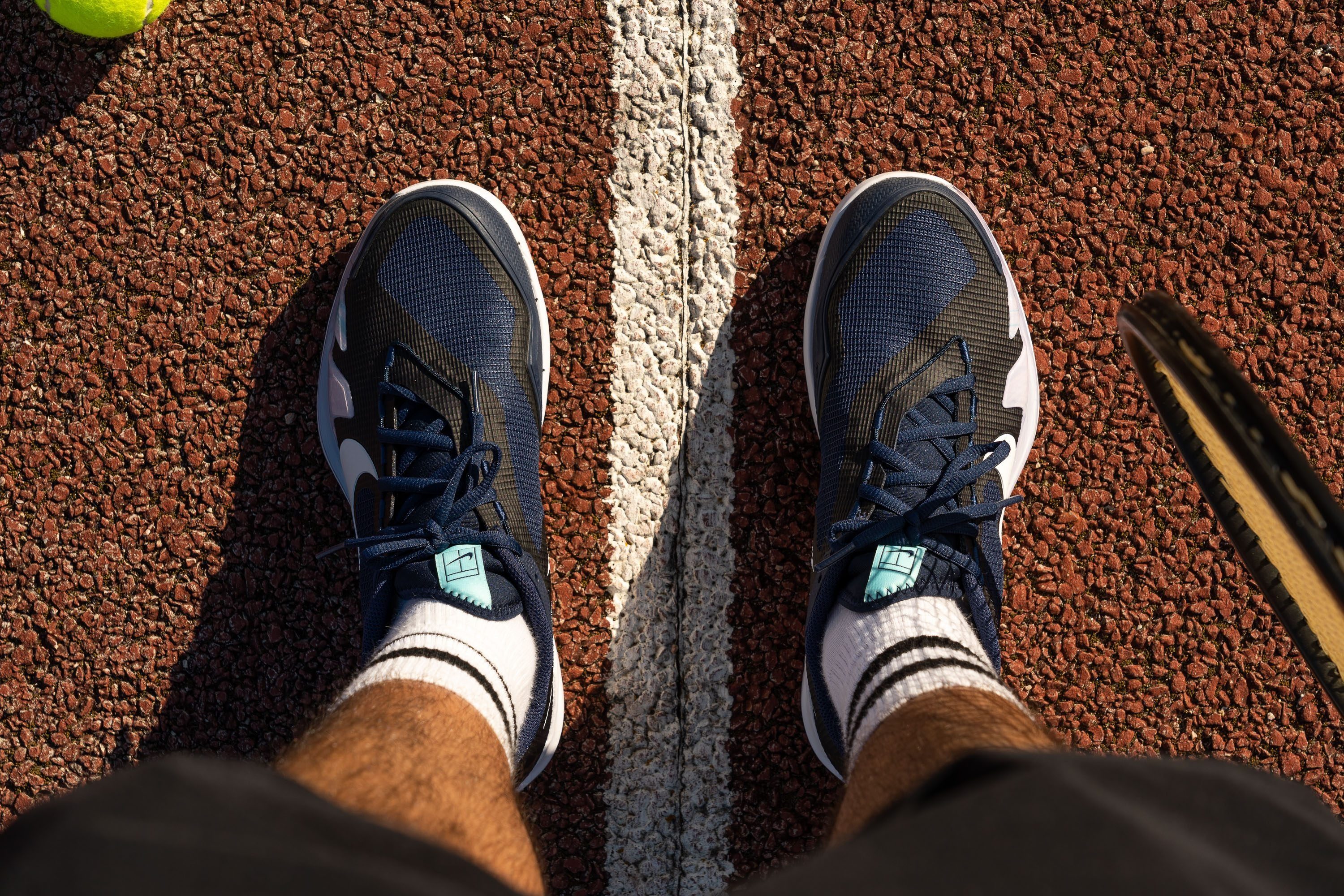
Harsh impact: While clubs benefit from such a durable surface, players need to be wary - hard courts can be relatively harsh on the body as the surface does not absorb impact as much as clay or grass. This is where a good choice in footwear, ideally a pair of hard court specific tennis shoes - pays dividends.
It’s fast! Hard courts are generally considered fast because the ball moves significantly quicker on a hard court than on a clay court, but not as fast as a grass court. Your shoes will need to be able to support your quick reactions accordingly.
Predictable ball movement: The ball bounce on a hard court is high but consistent, with less spin than clay courts, but more so than grass courts. This combination makes it easier to predict the ball’s trajectory and therefore makes it popular for beginners just learning how to play tennis right through to professionals training for an up-coming tournament.
Easy maintenance: Many local tennis clubs, large and small, enjoy the benefits of hard courts for their long-term durability, versatility and ability to keep clean and maintained easily. Likewise for your shoes; hard court tennis shoes are known as the easiest to maintain.
Hard court (HC) vs. clay court (CC) shoes
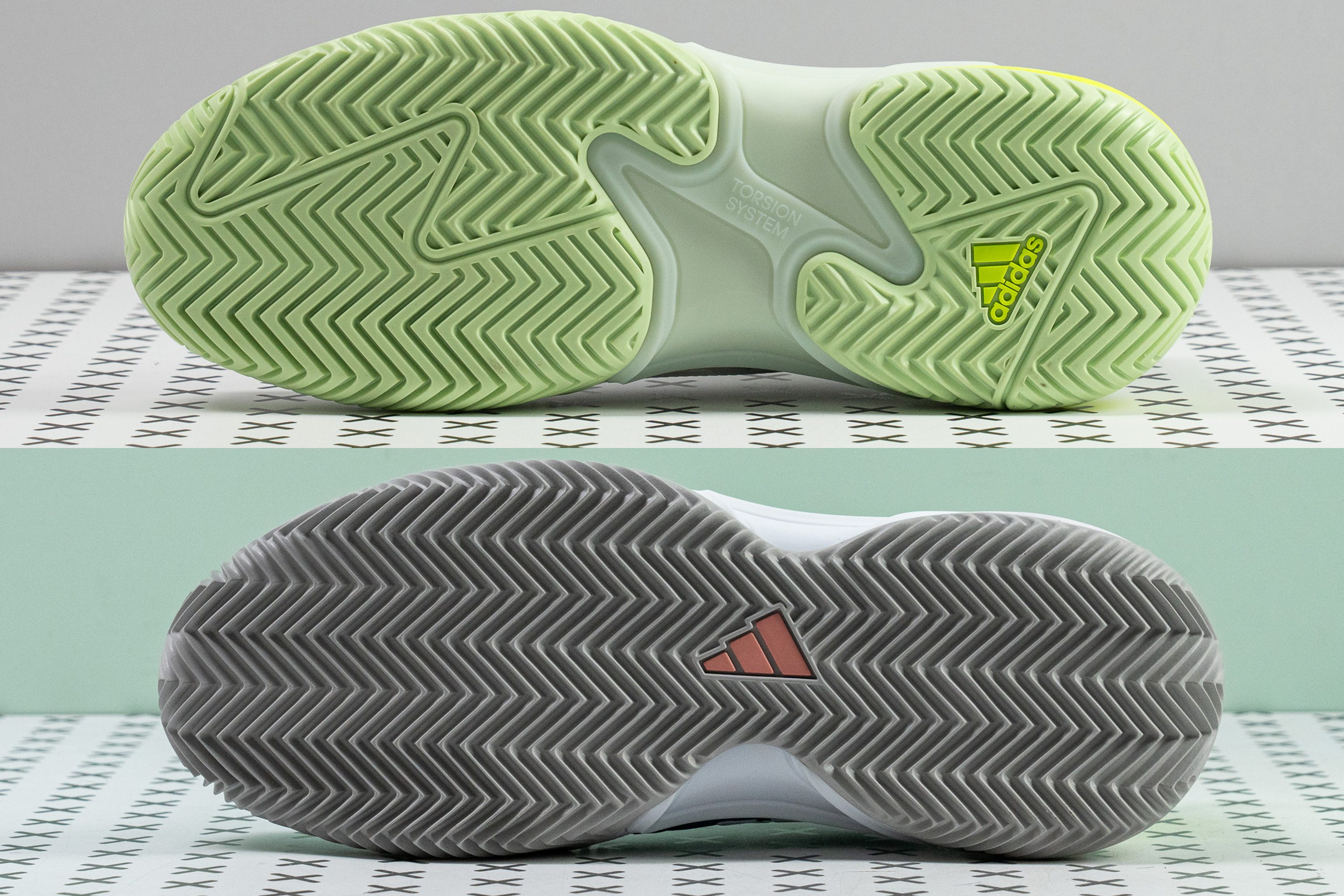
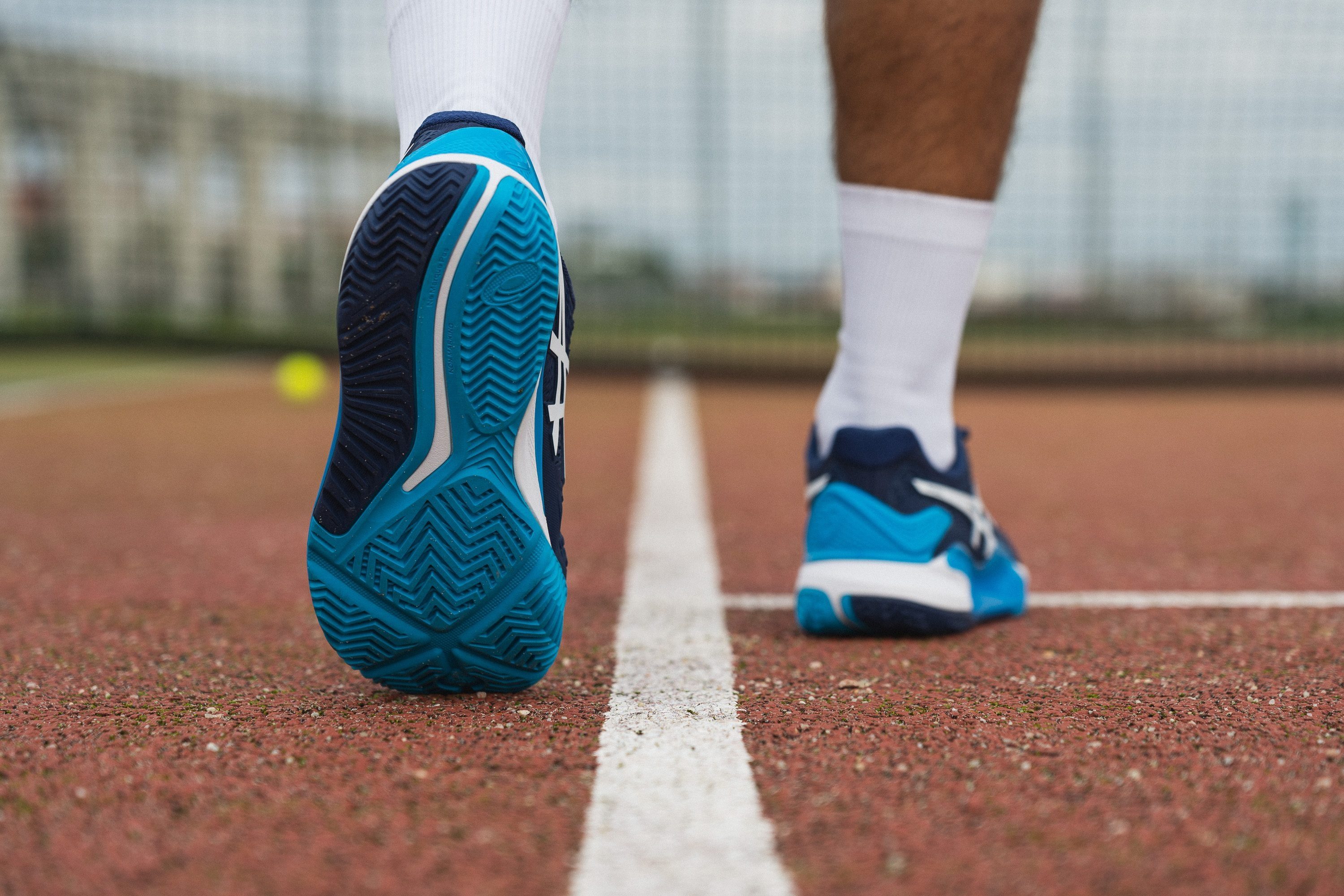
The primary difference between hard-court and clay-court tennis shoes lies in their outsole design which is conditioned by the court surface they were made for.
You can get away with wearing a clay-court shoe on hard court and vice versa but only for a game or two. For regular use, it is advisabe to get a court-specific shoe because:
- Clay-court shoes wear out too fast on hard courts. Also, their herringbone pattern is notably tackier which makes it more difficult to slide and is hard on the ankles and joints.
- Hard-court shoes lack the thinner and deeper treads for solid grip on more slippery clay courts. They also get more easily clogged with clay dirt.
What about All Court (AC) shoes?
Sometimes brands use the HC and AC labels interchangeably to highlight a given shoe’s versatility for various courts. So you can confidently use an AC shoe on hard courts.
Beginner and recreational players might as well use AC shoes on clay courts as long as their tread patterm is not too flat and smooth.
How to find a durable tennis shoe for hard courts
Hard court tennis shoes are created to withstand the most abrasive playing surface. That’s why durability is paramount in this type of tennis shoes.
To check the potential longevity of each shoe, we perform several durability tests involving a Dremel and a sandpaper tip in our lab.
We keep the Dremel speed and pressure consistent for comparable results.
Outsole durability
A tennis shoe outsole always takes the biggest hit as it constantly stays in contact with the court.
No wonder major athletic brands provide a 6-month outsole durabililty guarantee for their most advanced tennis shoes. It implies a free exchange for another pair in case the shoe’s outsole rubber rubber gets worn all the way to the midsole foam in less than 6 months.
In our lab, we attempt to predict each shoe’s outsole longevity by measuring the following parameters:
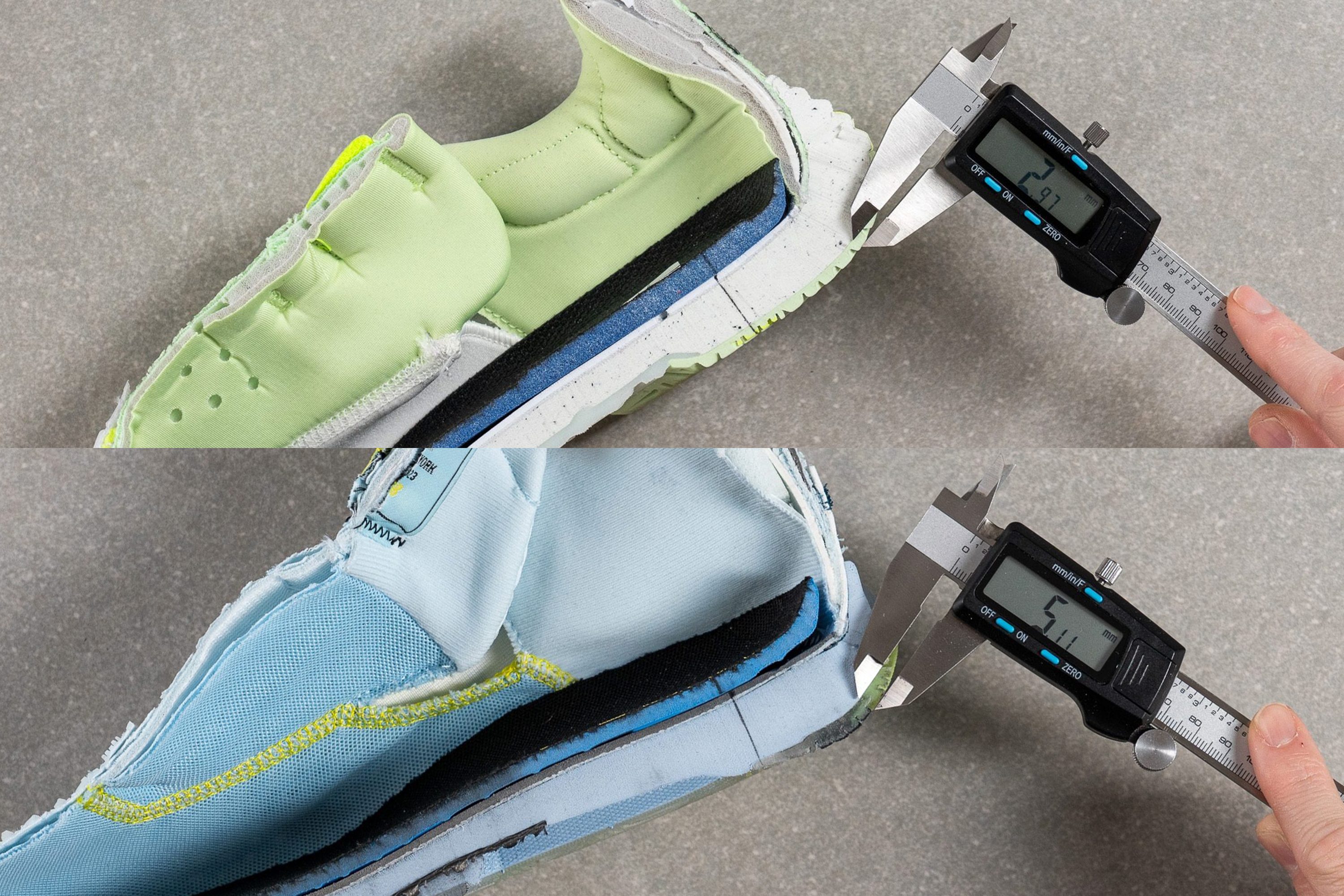
- thickness (using a digital caliper)
- abrasion resistance (using a Dremel, a sandpaper tip, and a tread gauge)
Thicker outsoles take much longer to wear out. To test abrasion resistance, we apply the Dremel to the outsole at a high 10K RPM speed and measure the dent it left in the rubber with a tread gauge.
The shallower the damage, the better the durability.
Here is the overview of hard court tennis shoes with the most durable outsoles.
We also included each shoe’s retail price (MSRP) to show you that it’s not always the most expensive shoes that have the best durability.
Toe drag guard durability
Another part of a hard court tennis shoe that sustains the most brutal wear and tear is the toe drag guard. Especially if it’s worn by an aggressive slider.
A drag guard is found on the inner side of the shoe’s forefoot section and, in some models, it also covers up the eyelets for enhanced protection.
But not all tennis shoes have the same level of toe reinforcement.
We test each shoe’s toe drag guard in the same conditions as the outsole because it is often made of the same rubber.
Assessing the severity of damage, we rate each shoe’s toe drag guard durability on a 1-5 scale (5 being the most durable).
Toebox durability
The toughest hard court shoes use rubber and plastic overlays all around the toebox to keep it protected from court slashes.
But most tennis shoes (especially lighter and speed-oriented shoes) only put a piece of rubber on the high-wear area leaving the rest of the toebox fabric exposed to wear and tear.
In our Dremel test, we apply sandpaper to the exact same spot on top of the toebox in all tennis shoes for consistency.
Then we rate the toebox durability on a 1-5 scale, where 1 is a total see-through hole and 5 looks like the the shoe was barely touched.
Heel padding durability
Even though the most brutal abrasion occurs externally, we also pay attention to the durability of each shoe’s inner lining.
Intense and dynamic movements of tennis can be pretty hard on the inside of your shoes too! Because once you blow through the fabric that lines the interiors, it can lead to major discomfort and even hot spots and blisters.
Considering the more delicate nature of this shoe part, we lower the Dremel speed to 5K RPM and apply the sandpaper for only 4 seconds to be able to see the differences in wear-resistance more clearly.
Cushioning durability
Even though we don’t have a test for cushioning durability just yet (in development), we want to emphasize its importance as well.
It’s easy to see when your tennis shoe’s upper or outsole start to deteriorate - you see holes, tears, and missing chunks of material. But the loss of cushioning cannot always be spotted visually - it can only be felt.
Here are a few telltale signs that your hard court shoe has lost its cushioning properties:
- the shoe feels firm and pancake flat underfoot, there is no give or bounce
- your feet and knees feel notably more fatigued after the match
- the midsole feels more compressed in some areas
To catch cushioning degradation early on, we recommend having at least two shoes in your rotation (a newer one and an older one) so that you can feel the difference.
Good shock absorption is important
Repetitive pounding on hard surfaces tends to build up and, over time, takes a toll on the player's feet, joints, and overall body.
So if you want to protect yourself from excess stress, overuse injuries, and feel comfortable during long rallies, it's worth checking the shock absorption of your future pair of tennis shoes.
To let you know exactly how much impact protection to expect, we take each tennis shoe through an ASTM F1976 test to measure its shock absorption both in the heel and forefoot.
Our extensive lab data showed that tennis shoes with 95-105 SA readings in the heel provide an optimal amount of cushioning and are a safe bet for most athletes. But if you need more, consider shoes with measurements above 105 SA.
Hard court tennis shoes for every playing style
Some players move all over the court and need a lighter and nimbler shoe to accommodate their agile playing style. Others need more substantial footwear to support their forceful lateral shifts at the baseline.
Based on the type of movements they cater to, all hard-court tennis shoes can be roughly divided into two categories - speed shoes and stability shoes.
Speed tennis shoes
These nimble shoes are suitable for players who spend most of the game on their toes, flexing more easily with the foot. They also provide a better sense of connection to the court.
Speed shoes have notably sleeker designs, fewer upper overlays, and no obtrusive stabilizers on the sides to keep the player as light on their feet as possible.
The average weight of hard-court tennis shoes hovers around 12.8 oz (365g) while speed-oriented shoes range from 10.5 oz (300g) to 12.5 oz (355g).
Stability tennis shoes
Stability shoes are designed for tennis players who rely on extra support for aggressive side-to-side movements.
Considering that lateral ankle sprains are the most common type of injuries in court sports, both professional and beginner players can benefit from a supportive shoe that minimizes the risk of ankle rolls.
Stability-oriented tennis shoes are easy to recognize by their stout TPU walls on both sides of the midfoot as well as supportive elements around the heel. Most of these shoes also have stiff shanks embedded into their midsoles.
When combined, all these components create a lot of torsional rigidity which can be felt by twisting the shoe with your hands.
We perform a manual twist to assess each shoe’s torsional rigidity on a 1-5 scale.
Stability shoes also have pretty stiff and structured heel counters with generously padded collars to lock the rearfoot securely in place.
We push and squeeze the shoe’s heel counter to rate its stiffness on a 1-5 scale.
These shoes also have notably wide platforms with protruding lateral flanges, offering a stable landing and push-off base.
Hard court tennis shoes with the best traction
A grippy outsole is essential for keeping you surefooted throughout the entire session. That's why we meticulously measure each tennis shoe's gripping capacity in our traction test following the SATRA TM144 methodology.
Our testing machine mimics a stopping motion of the foot and records the coefficient of friction that's generated by the shoe's outsole in the forefoot. The higher the friction, the tackier the traction.
We found that the range of 0.70-0.85 is normal for hard-court tennis shoes, especially if you prefer a balance of grip and give. Because more traction doesn't necessarily mean a good thing as it can put more stress on the lower extremity joints.
But if you are after that tacky experience, opt for shoes with a friction coefficient of 0.85 or more.
Link nội dung: https://www.sachhayonline.com/giay-nike-tennis-a59582.html