
Nike Air Zoom Pegasus 39 review
Who should buy the Nike Air Zoom Pegasus 39
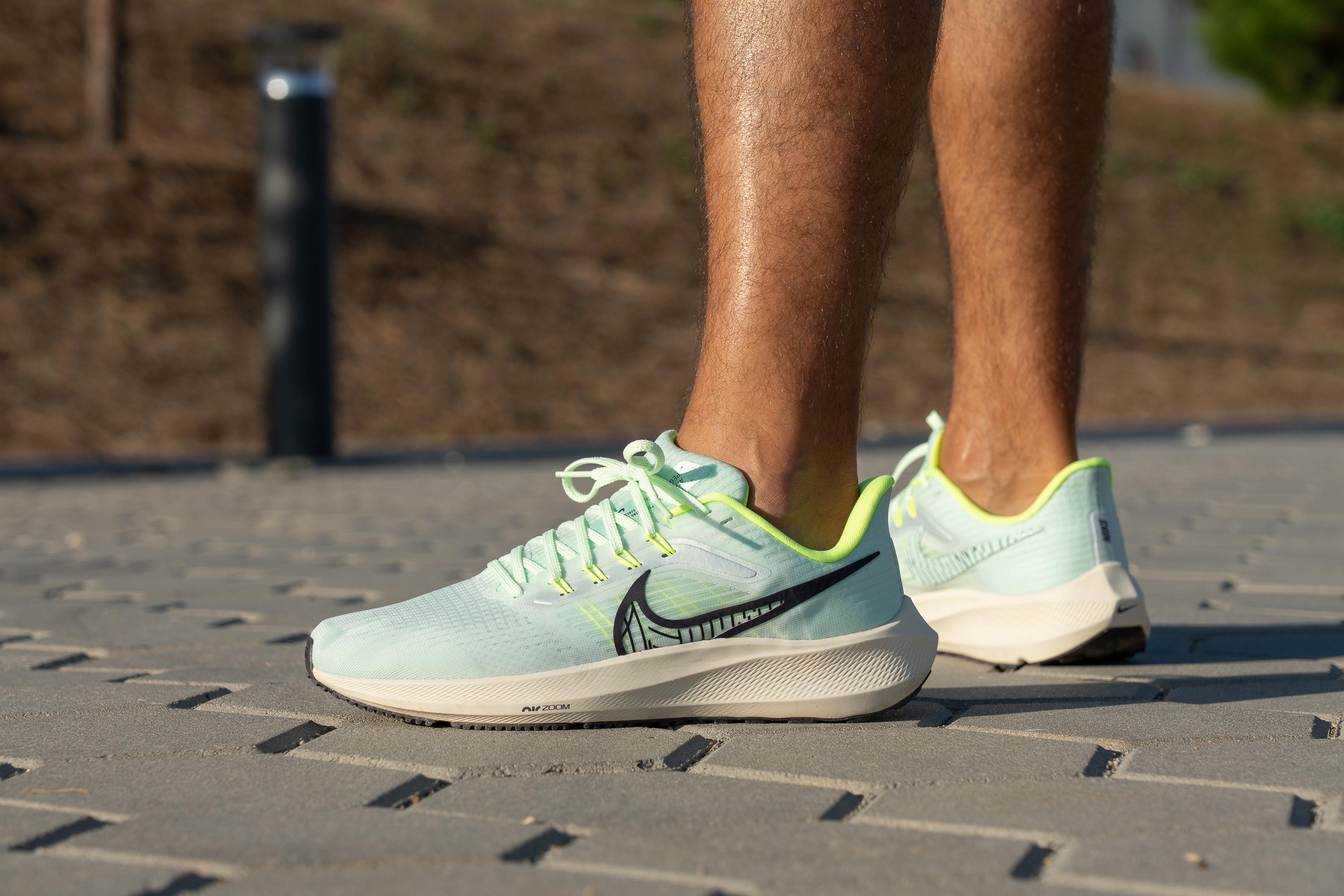
Grab a pair of Nike Pegasus 39 if you're looking for a:
- reliable all-rounder that's durable and stable
- Nike Pegasus that brings back the feel of the well-loved Nike Peg 36 and is a lighter version of the Pegasus 38
Who should NOT buy it
If you want a highly breathable shoe that's ready to beat the heat and is comfy for recovery efforts, we are certain that the Nike InfinityRn 4 is anything but a disappointment.
And if it's a spacious toe room you're after, we vouch that the Nike Vomero 17 will serve you better.
Nike Pegasus 39 vs. 38
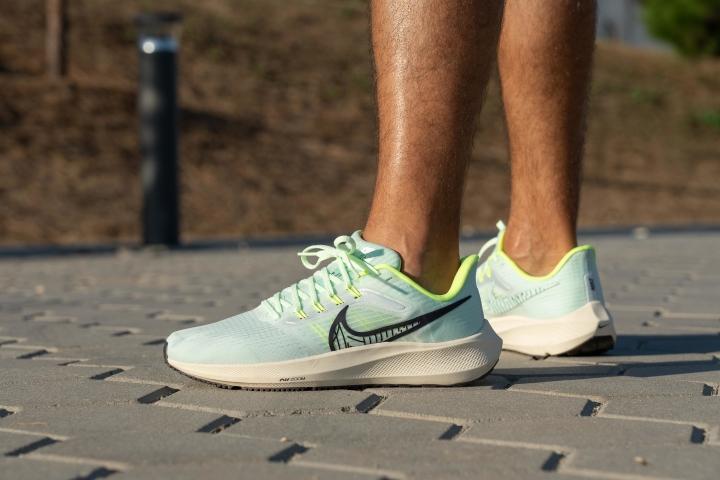
The Peg 38 and 39 may not be significantly different, but the subtle changes in the newer version are a very welcome touch:
- lighter by 0.7 oz (20g)
- more locked-in fit
- better responsiveness owed to the added Zoom Air units in the heel and forefoot
- stickier grip from the redesigned outsole
Uh-oh, it's can't take the heat
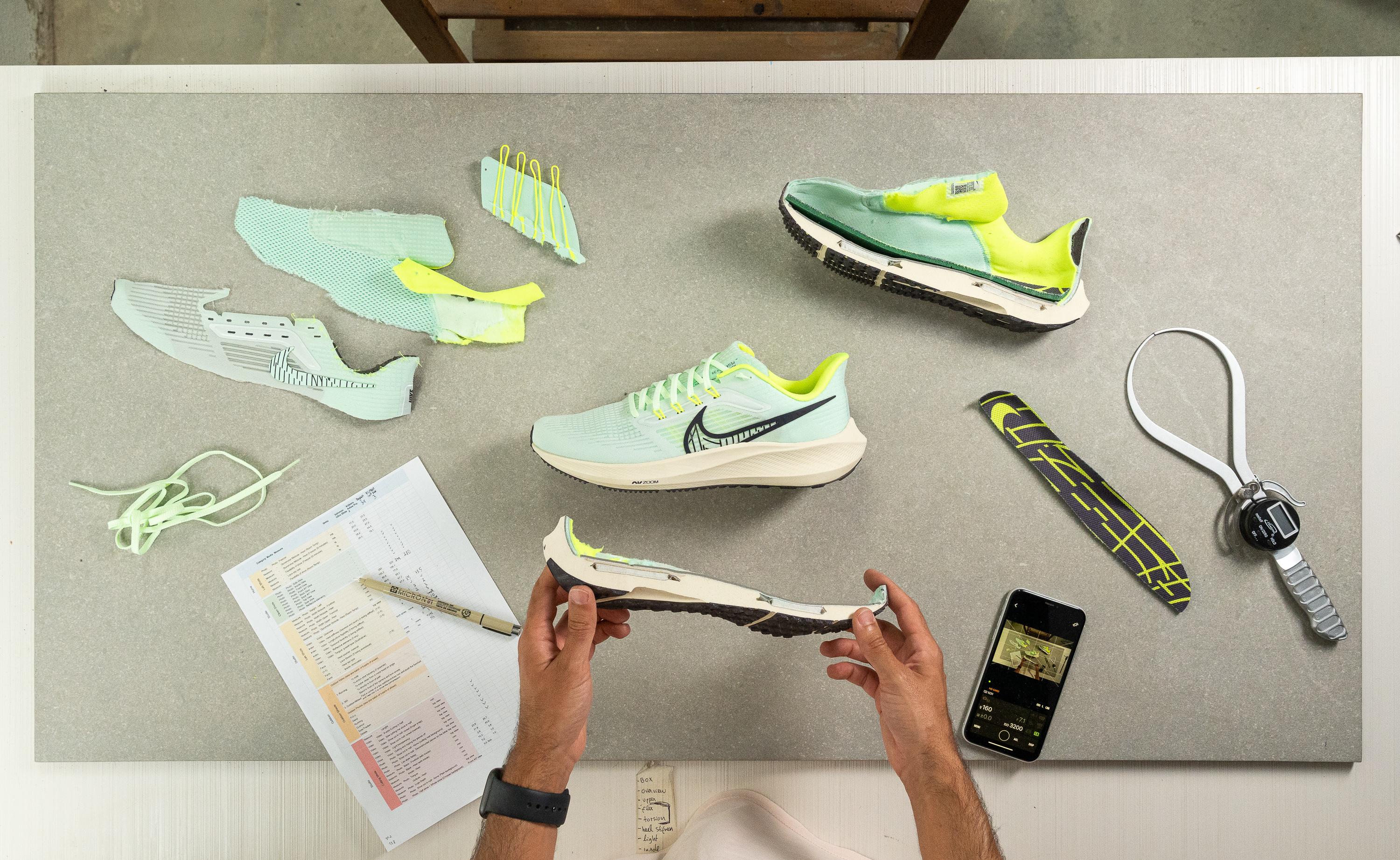
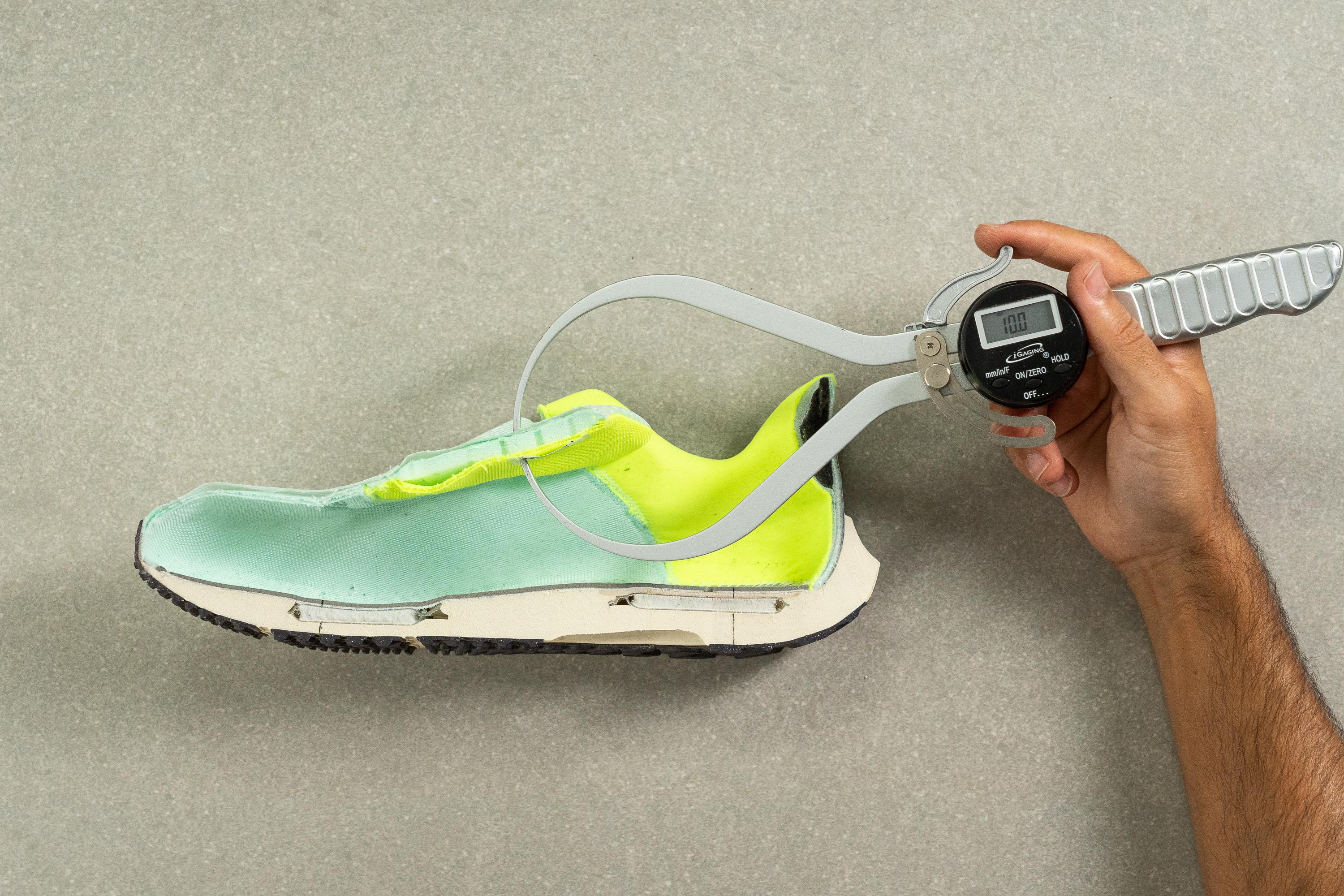
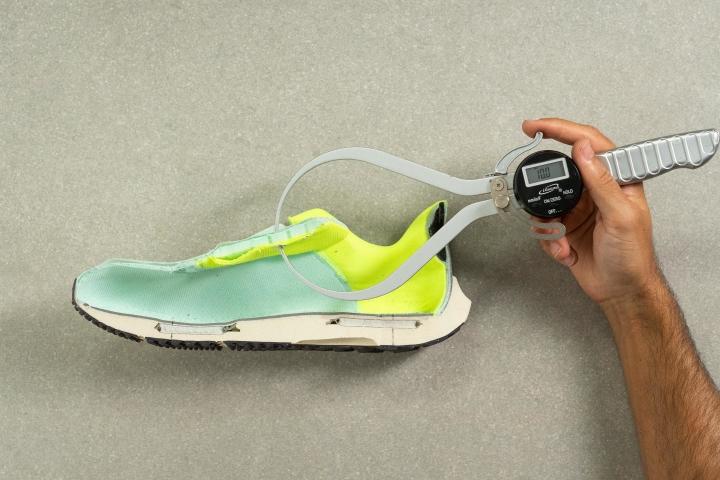
The shoe's upper is very well padded and it's comfortable straight out of the box. Measuring the tongue thickness, for example, returned 10 mm which is 4 mm thicker than the average!
Because of this, we haven't had any hot spots or blisters and the shoe also feels very comfortable for all-day, casual wear.

But of course, all this comfort comes with a price. And that's breathability (or the lack thereof). Testing the shoe on a moderately warm summer day (when the sun wasn't even scorching hot yet), our feet wanted the shoe to be off.
As durable as a Pegasus can be
This Nike Pegasus shoe is built like a tank. We foresee that it can withstand hundreds of miles mostly due to its hard-wearing rubber outsole.
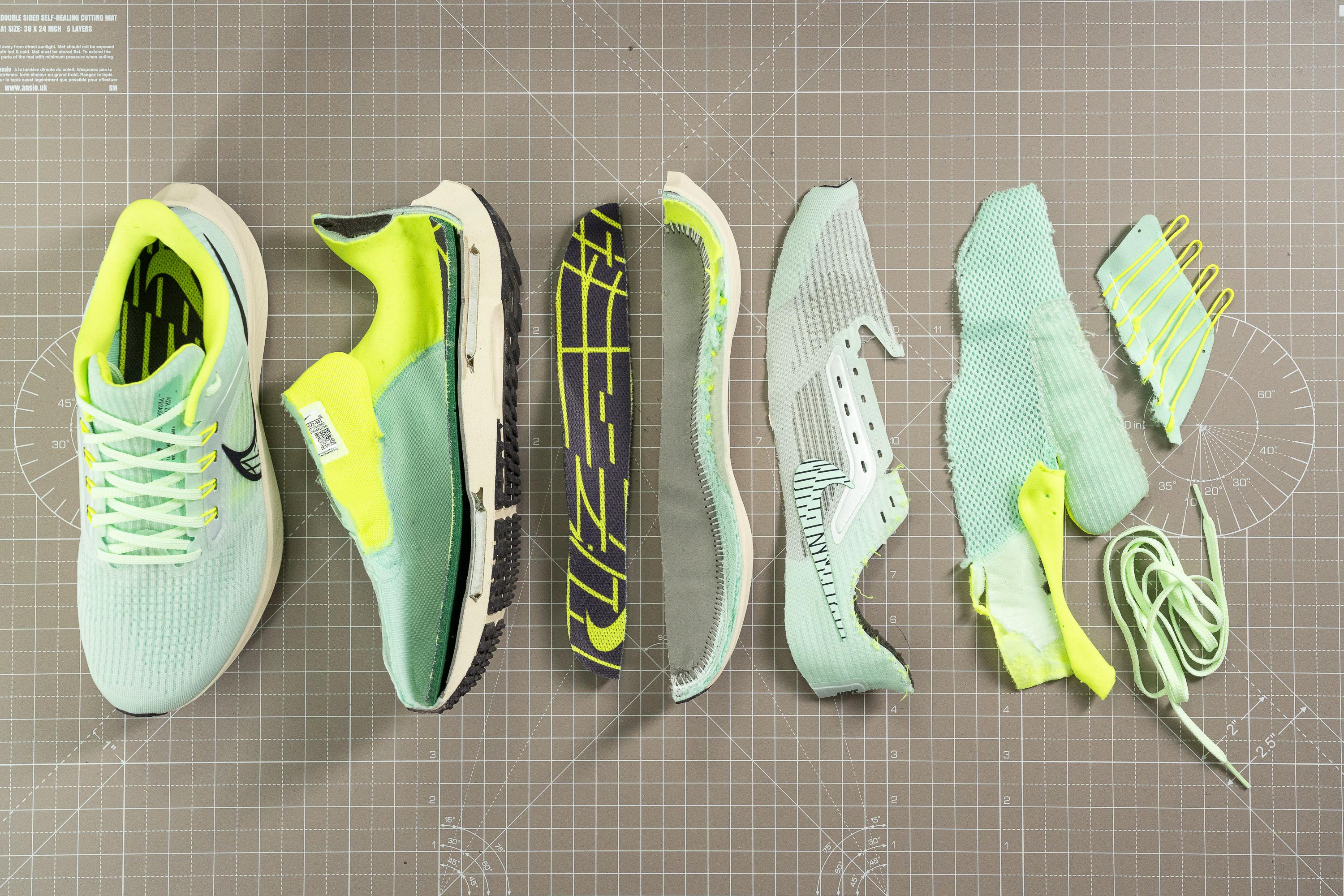
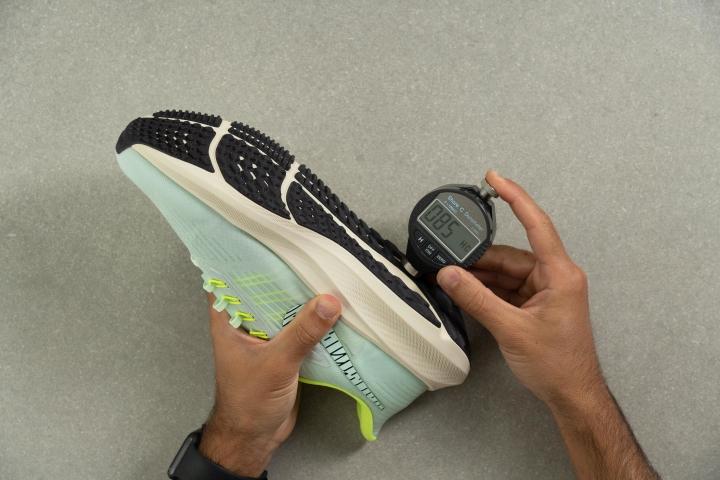
To check the firmness of the rubber, we pressed our durometer against it. The tool showed 85 HC which is firmer than the average 80 HC in our lab.
Heel drop is off
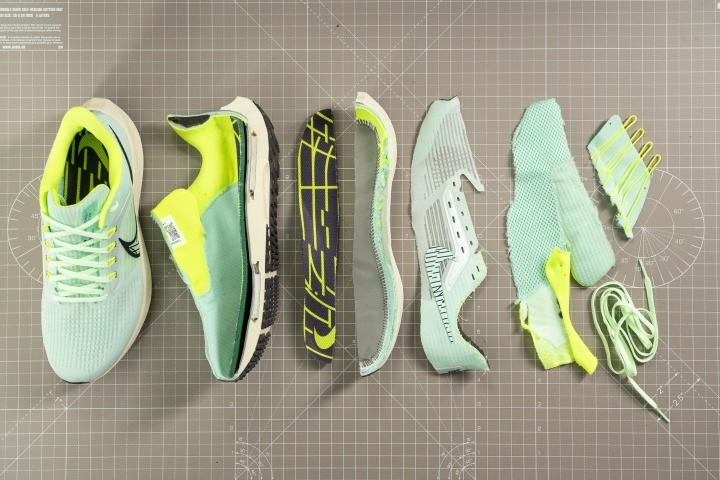
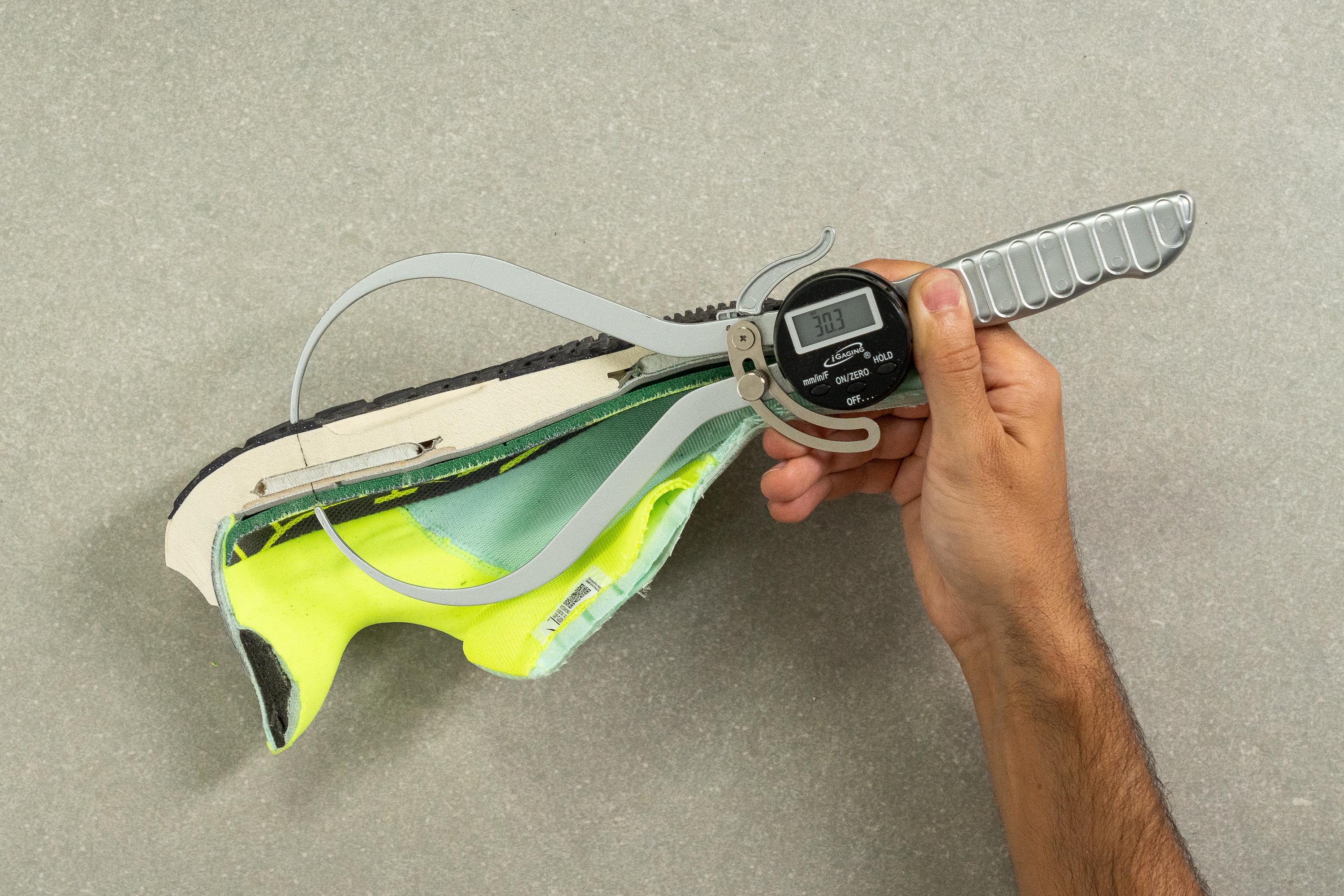
The brand says 10 mm and we measured 8 mm.
This is based on our caliper measurements of the shoe's stack height in the heel (30.3 mm) and in the forefoot (22.3 mm).
Nails it in the fit department
Looks like the Nike Pegasus 39 addresses some of the issues runners had with the 37 and 38. With its revamped upper, the shoe appears to have a slightly roomier toebox and a more secure heel cold (to prevent heel slips).
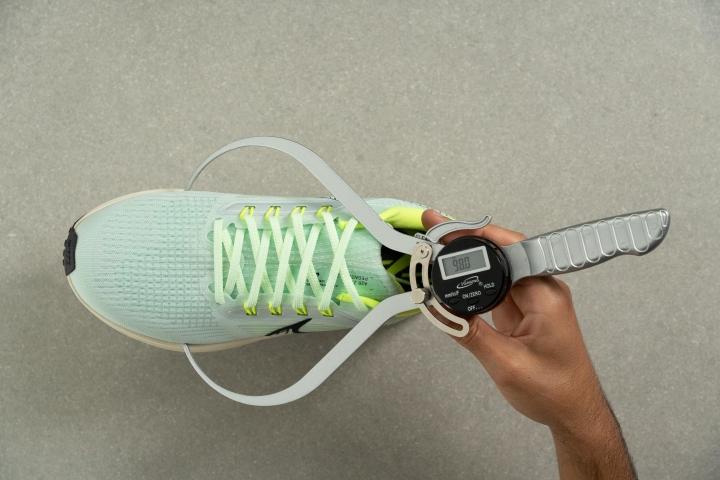
However, if you're a wide-footed runner, we're sorry to report that this shoe is still not roomy enough for an accommodating fit. Measuring the widest part of the toebox with a caliper, we got 98.0 mm which is exactly the same as the average of road running shoes.
Everything you expect from a Pegasus
As befits a Nike Pegasus shoe, the 39 is a fantastic all-rounder! We felt like it was more reactive when picking up the pace than its precursors (37 and 38).
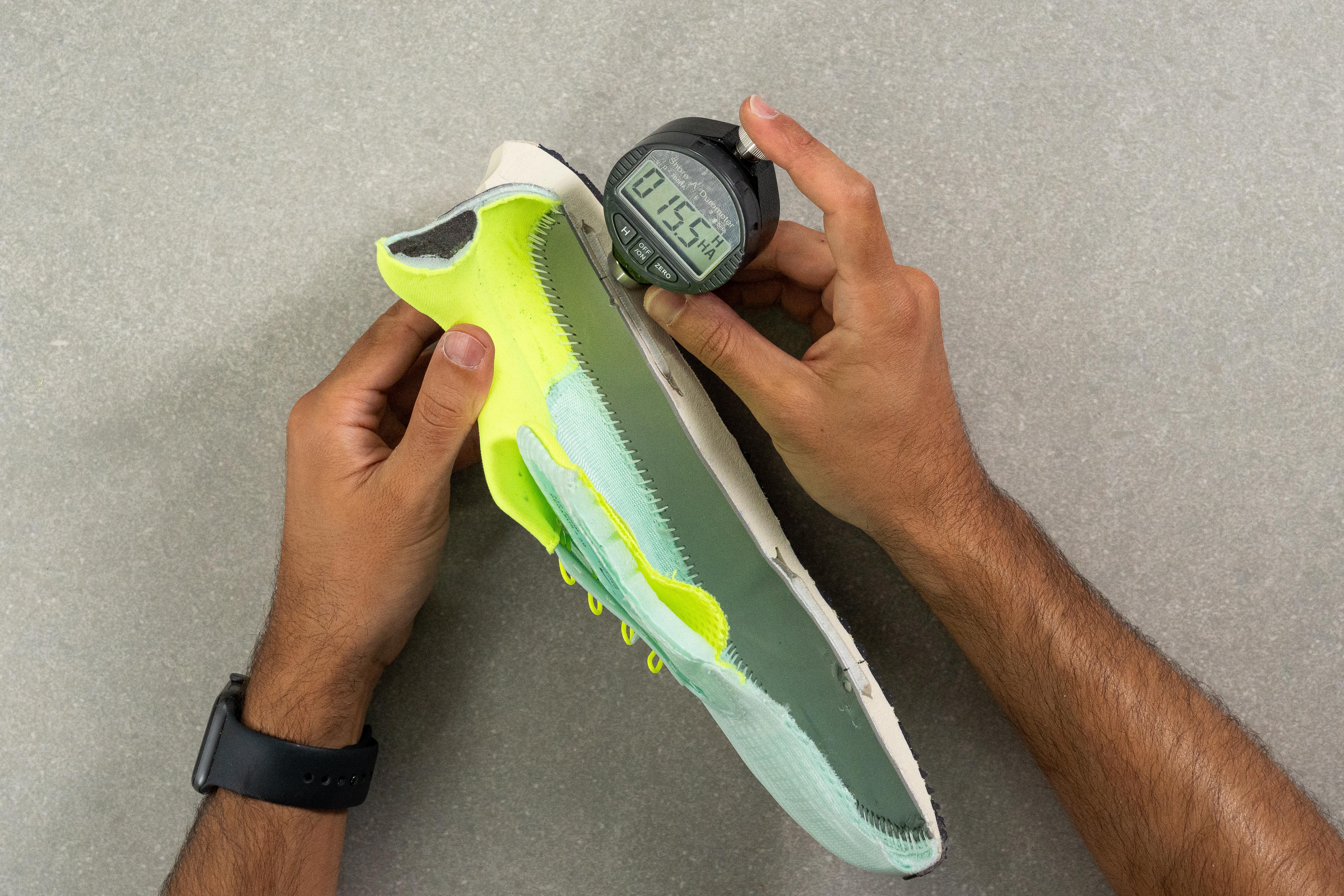
And for long runs, the shoe turned out to be much squishier and cushier. Our lab measurements confirmed our experience - the durometer showed 15.5 HA which is 55% softer than average!

Soft even when it’s cold outside
Running shoes tend to get firmer when it’s cold outside but it's not a big problem for the Pegasus 39.
After keeping the shoe in the freezer for 20 minutes, it didn't turn into a firm brick! Our durometer showed that the midsole went from 15.5 HA to 23.3 HA and this is still softer than road running shoes on average by 3%.
An anchor to your feet
Not exactly weight-wise, but stability-wise. The Nike Pegasus 39 feels really planted when cornering. This is thanks to the shoe's relatively firm midsole and tacky grip.
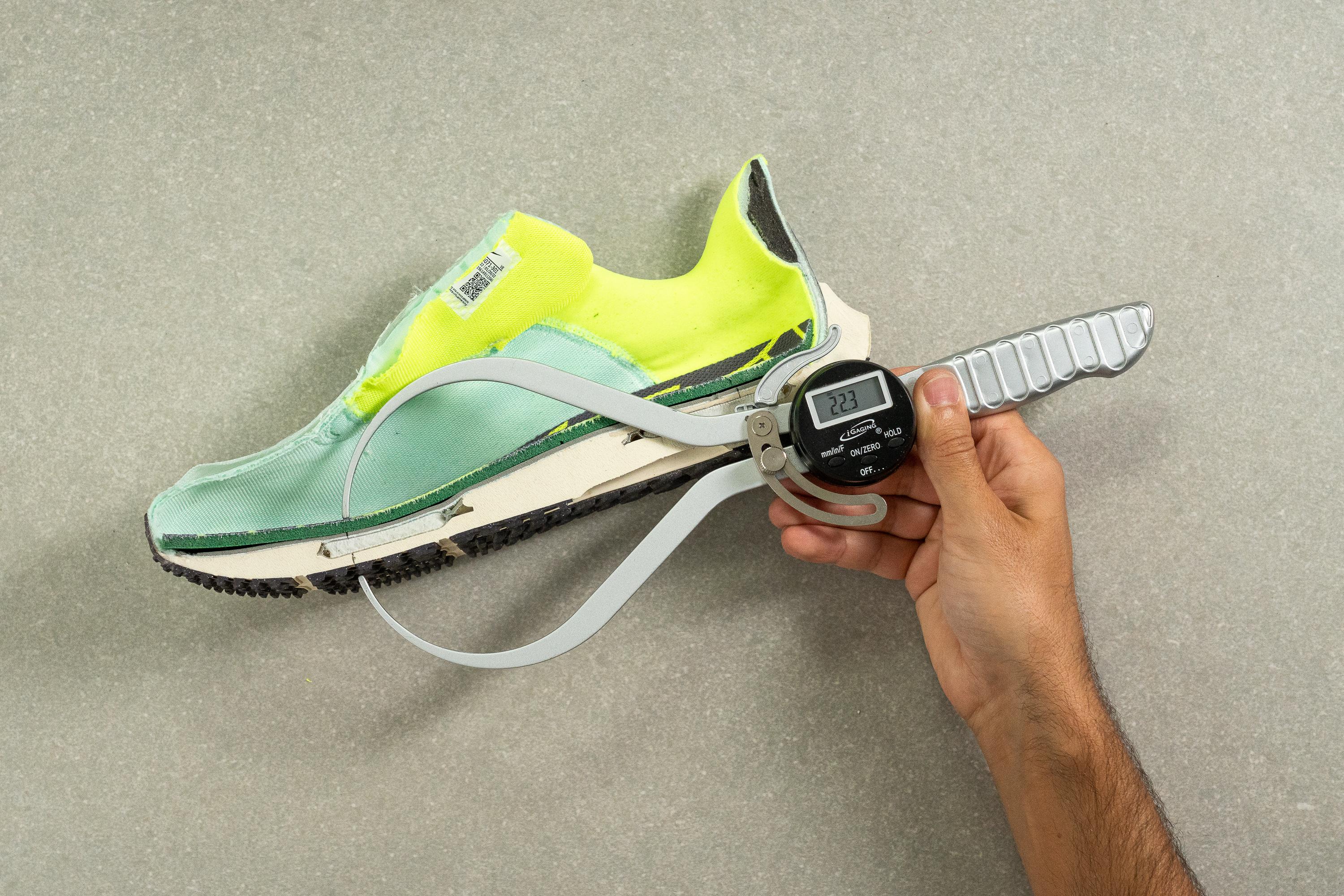
In the lab, not much goes on to confirm why this shoe feels especially stable. Definitely, there’s a less-than-average amount of cushioning. At the heel, we’ve measured 30.3 mm (the average is 32.7) and at the forefoot, we’ve measured 22.3 (vs 24.1 mm that’s the average). So it’s a slightly lower-to-the-ground shoe.
Take something else for recovery days
The new Zoom Air pod in the forefoot creates a disjointed feel that makes the heel-to-toe transitions suffer. What's worse is that the airbag feels intrusive and the "lumpy" sensation gets in the way when really slowing it down.
The Pegasus 39 goes on a diet
It weighs 8.8 oz or 249g. The average for all shoes that went through our lab is 9.6 oz or 272g.
It's not only lighter than its predecessor; it's also lighter than its peers like the Brooks Ghost 14 (280 grams/9.9 ounces) and the NB 880 v11 (275 grams/9.7 ounces).
Even though it could feel a bit bottom-heavy because of the copious amount of rubber it has, we still think that the 39 experienced a major weight loss!
Lockdown has never been this good
Especially for a Nike Pegasus. In this iteration, the Nike Flywire makes a triumphant return, providing a snug midfoot lockdown. What's more, it doesn't cut into your feet.

Complementing the Flywire is the shoe's tongue that's attached to the inner sleeve. It not only locks the foot in but also prevents the tongue from sliding.
Sticks better than your regular daily trainers
This is especially true on wet concrete, light trails, and grassy terrain. We actually found it to be one of the most aggressive outsoles on a daily running shoe!
Pegasus 39 is very flexible
In our manual flexibility tests, the Pegasus 39 scored 2/5 both for longitudinal and torsional flexibility. Because 1 refers to the most flexible shoes, this Nike trainer is on the flexible side. For context, the average in our lab is 3.3 and 3.4 respectively.
Link nội dung: https://www.sachhayonline.com/pegasus-39-a65932.html